Songs Shaped by the River: Bhatiyali & Sari Gan, Folk Songs of Bengal
– Ms Riya Kamble
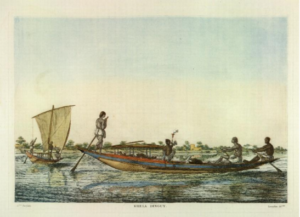
Figure 1. Boats of Bengal — Khela Dingee (Khela or Lal Dingi) Frans Balthazar Solvyns (1760-1824)
India is a country abundant with rivers, forests, and mountains, each possessing its own unique characteristics. These natural features are intertwined with human life, which is reflected in various artistic representations. Some expressions are written, some are illustrated, and others are passed down through oral traditions.
One such oral tradition comes from the region of Bengal. The region is home to rivers like the Ganga, Brahmaputra, Hooghly, Damodar, and many more. This land, known for folk arts like Pattachitra and Dokra, is also home to folk music traditions such as Bhatiyali and Sari Gan.
Bhatiyali, a genre of Bengali folk music traditionally performed by boatmen, reflects their lives intertwined with the river, boats, and the surrounding environment. The term Bhatiyali is derived from Bhata, which means the ebb or downstream flow of the river. Scholars believe that Bhatiyali originated in the northern expanses of the Brahmaputra River, specifically in Bangladesh (then India). Characteristically, Bhatiyali is an arrhythmic form of music,
performed alone, without dance or musical instruments. They may occasionally be accompanied by an instrument like Ekatra1.
In contrast, the Sari Gan, this genre is sung with rhythm. To help arouse the energy and enthusiasm of boatsmen during seafaring. As it is mainly passed through oral traditions, the origin of these genres is difficult to trace. Some scholars state that the Buddhist text Charyapada and the Hindu literature Padma Purana have references to Sari Gan.
Both Bhatiyali and Sari Gan are embedded with epic connections. The narratives of divine lovers Radha and Krishna are often conveyed through Bhatiyali songs, reflecting themes of solitude, longing, and nature. Similarly, Sari Gan describes the journey of the Ganga River, portraying the river’s journey from heaven to the earthly realm.
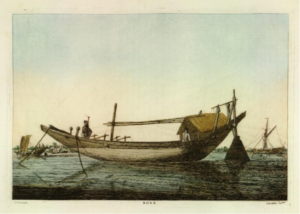
Figure 2. Boats of Bengal — Burr (Bhur) by Frans Balthazar Solvyns (1760-1824)
1 Ektara is a one-stringed musical instrument widely used in the folk music traditions of the region of Bengal.
Bhatiyali
“O Majhi Tor Naam Janina” Meghe Dhaka Tara (1960) written by Ritwik Ghatak
“I cried my heart out by the river of the mundane Who is there to help you cross over, oh my mind.
I spent my good days
And now I have come to the river, O boatman, I do not know your name
Who would I call?
I do not know your name.”2
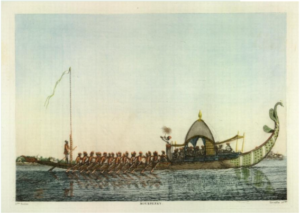
Figure 3 Frans Balthazar Solvyns (1760-1824), Boats of Bengal — Moorpunkee (Morpankhi).
Sari Gan- this genre is sung with group calls and response patterns and repetitive harmonious phrases, accompanied by vibrant rhythmic instruments such as Khanjanies, during a boat race.
————————————————————
2 Translation of “O Majhi Tor Naam Janina” quoted from Amit Karmoker, “The Concept of Bengali Folk Music & Instruments about Bhawaiya, Bhayiali, Baul Songs & KabiGaa, p 228-233.
Prana Sakhire Bansi Bajay Ke (Verse 1)
Who plays the flute on the edge of the acacia forest Oh, who plays the flute, my sweetheart, who plays the flute
Are oh oh oh
I gave my mind, I gave my life, I love him
Oh my sweetheart3
These musical traditions are deeply embedded in the culture of Bengal and are still practiced in both Bangladesh and West Bengal, India. The modern generation of musicians, composers, and singers has embraced this genre to convey their emotions and creativity. Celebrated composers of Bhatiyali music, such as Rashid Uddin, Jang Bahadur, Miraz Ali, and Umed Ali, made significant contributions during the 1930s to the 1950s. Recently, in the year 2000, artists like Malay Ganguly and Bari Siddiqui have played a pivotal role in revitalizing this genre, which has also found a place within the celebrated film industry of Bollywood. The continued adaptation of bhatiyali and sari gan across diverse musical forms demonstrated their enduring cultural relevance and their significant contribution to the musi cal heritage of the Bengal region.
3 Translation of Prana Sakhire Bansi Bajay Ke, quoted from Sreemoyee Bhattacharyya, “Traditional Sari and Bhatiali Songs of Bengal,” pp. 4–5.
References
Bhattacharyya, Sreemoyee. Jan-Feb 2025. “Traditional Sari and Bhatiyali Songs of Bengal.”
International Journal for Multidisciplinary Research (IJFMR).
Karmoker, Amit. November 30, 2022. “The Concept of Bengali Folk Music & Instruments about Bhawaiya, Bhayiali, Baul Songs & KabiGaan.” In भारतीय लोक कलाकार, 228-233. Vadodara, Gujarat: Department of Tabla, Faculty of Performing Arts, The Maharaja Sayajirao University of Baroda Press (Sadhana Press).
Mukherjee, Sreya. n.d. “Harmony of Riverine Rhythms: A Study of Traditional Ecological Episteme in the.” Volume IV, Perspectives- A Peer-Reviewed, Bilingual, Interdisciplinary E-Journal 63-82.
Roygupta, Anwesha. n.d. “Streaming the River’s Voice: A Journey Through Bhatiyali Gaan.”
oaklores.com.
Bhatiyali – Music of the River Communities, .bangladesh.com/blog
Photos
Frans Balthazar Solvyns, 1811, Les Hindoûs, Vol. III, Paris: Chez L’Auteur, Place Saint-André-des-Arcs, Coloured Etchings, archive.org.


0 Comments